
Managing a commercial facility demands a disciplined and structured approach to physical upkeep. Property managers, facility directors, and asset managers face constant operational demands, ranging from maintaining occupant comfort to satisfying strict municipal building codes. Postponing routine maintenance tasks almost always results in sudden equipment breakdowns, expensive emergency service calls, and unnecessary operational downtime. Establishing a thorough, routine maintenance checklist enables property leaders to protect their real estate investments while maintaining high operational standards across every square foot of their holdings.
Building inspections should never be treated as casual walk-throughs or superficial tasks. Instead, they require a systematic review of structural integrity, mechanical systems, electrical infrastructure, plumbing networks, and exterior grounds. Property managers who institute formal inspection routines spot minor wear and tear before it expands into costly capital expenditures. Furthermore, detailed maintenance documentation offers invaluable historical evidence during lease negotiations, property value appraisals, and annual insurance coverage reviews.
The primary goal of a comprehensive commercial property maintenance checklist is to establish a clear and predictable routine. By organizing tasks into logical operational categories, facility teams can assign responsibilities efficiently, allocate operational budgets accurately, and ensure that licensed trade specialists handle technical tasks safely. Whether overseeing a suburban office complex, a busy retail shopping center, or a large industrial warehouse, implementing a structured inspection framework ensures long-term building durability and consistent tenant satisfaction.
Inspecting Roof Assemblies and Exterior Structural Shells
The building envelope serves as the primary barrier against harsh weather conditions, moisture intrusion, and seasonal temperature shifts. Weathering, ultraviolet radiation, and constant thermal expansion and contraction gradually degrade external building materials over time. Conducting thorough visual assessments of the building shell helps prevent concealed water damage, structural deterioration, and efficiency loss.
Inspectors should begin at the top of the facility by examining the condition of roofing membranes, flashing assemblies, coping caps, gutters, and primary drainage scuppers. Accumulated debris, standing water, and cracked perimeter sealants signal potential points of failure that demand immediate attention. When a commercial roofing system approaches the end of its functional life, facility managers must plan and execute a complete roof installation to protect interior assets, structural supports, and inventory from severe water damage.
Beyond the roof deck, vertical exterior walls require careful evaluation for masonry cracking, failing tuckpointing, or sealant deterioration around expansion joints. Windows and pedestrian doors should be inspected for worn weatherstripping, failing perimeter caulking, and compromised frames. Water penetration behind exterior wall cladding often remains undetected until significant hidden rot occurs, making early identification through routine visual checks vital for building longevity.
Maintaining Exterior Asphalt and Parking Surface Safety
A commercial property’s parking lot, loading docks, and driving lanes create the initial physical impression for visiting clients, tenants, and delivery vehicles. Beyond basic curb appeal, asphalt and concrete surfaces represent significant liability risks if allowed to deteriorate into disrepair. Potholes, uneven pavement edges, and standing water create hazards that lead to personal injury claims or vehicular damage.
Routine pavement inspections should focus on identifying surface cracking, oil saturation, deep rutting, and low spots that collect standing water. Small surface cracks allow rainwater to reach the underlying sub-base, where freeze-thaw cycles expand those cracks into severe potholes and structural subgrade failure. Partnering with a professional paving company allows facility managers to schedule timely crack sealing, asphalt patching, and sealcoating before total surface reconstruction becomes necessary.
Drainage management across all paved surfaces requires equal attention during routine inspections. Catch basins, curb inlets, and storm drains must be cleared of accumulated sediment, leaves, and trash to prevent localized flooding during heavy rainstorms. Proper surface grading directs stormwater runoff away from building foundations, preserving the integrity of both the pavement base and the underlying building structure.
Ensuring ADA Accessibility Compliance and Walkway Safety
Commercial properties must provide safe, accessible physical routes for all occupants, visitors, and employees. Property owners are subject to strict federal, state, and local accessibility mandates that govern public accommodations and safety standards. Neglecting path-of-travel requirements can lead to regulatory penalties, costly legal disputes, and compromised public access.
Inspectors must regularly verify that designated accessible parking spaces feature appropriate signage, distinct pavement markings, and wide access aisles. Path-of-travel routes connecting parking structures to primary building entrances should maintain smooth, uniform surfaces free from abrupt height shifts or wide gaps. When existing concrete walkways fail to meet mandated slope specifications, building managers must schedule a commercial wheelchair ramp installation to maintain full regulatory compliance and ensure safe physical entry.
Ramp inspections should focus on slope ratios, handrail continuity, landing dimensions, and surface slip resistance. Handrails must remain firmly secured to structural mounts without rust or sharp structural edges. During winter weather, accessible entry routes demand immediate snow clearing and de-icing treatments to protect individuals with mobility devices from dangerous slipping hazards.
Securing Perimeter Boundaries and Automated Entry Systems
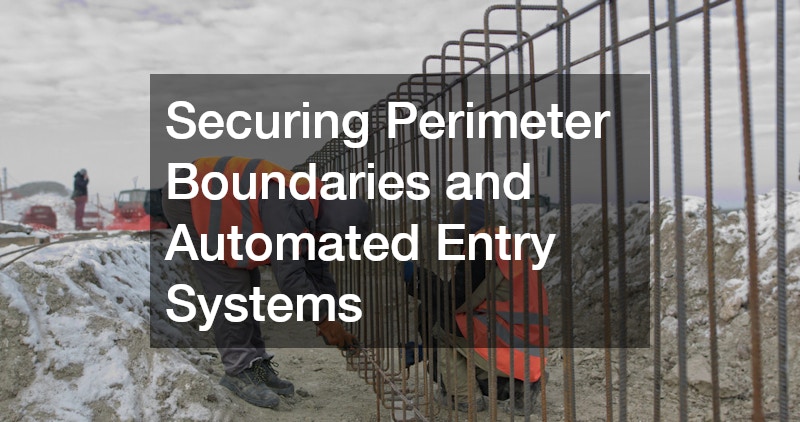
Defining clear property boundaries and controlling physical access points represent vital components of commercial site safety. Perimeter structures protect site equipment, direct vehicle traffic, and prevent unauthorized personnel from accessing restricted areas. Compromised gates or damaged fencing weaken property security and create safety hazards for employees and visitors.
Routine evaluation of property perimeters involves checking fence post stability, chain-link tension, panel alignment, and hardware integrity. Facility personnel should check for signs of metal corrosion, vehicular impact damage, or heavy vegetation growth that could weaken the barrier structure. Maintaining a well-built commercial fencing and gate system secures property boundaries while organizing vehicle traffic into designated entry and exit lanes.
Automated access gates and motorized entry systems require technical inspection alongside physical barriers. Safety sensors, photo-electric eyes, vehicle loops, emergency vehicle switches, and manual override hardware must be tested every quarter. Keeping automated entry points fully operational prevents traffic congestion at main facility gates while preserving overall perimeter security.
Optimizing Thermal Insulation and Energy Efficiency
Energy efficiency and consistent indoor climate control depend heavily on an effective building envelope and proper thermal insulation. Modern commercial structures rely on robust insulation barriers to lower utility expenses, minimize HVAC workloads, and prevent internal moisture condensation inside wall assemblies and ceiling spaces.
Facility inspectors should examine mechanical rooms, roof interstitial spaces, and drop-ceiling plenums for missing, sagging, or moisture-damaged thermal material. Wet insulation loses its thermal performance completely and indicates hidden roof leaks or piping condensation. Hiring an experienced commercial insulation contractor allows building owners to identify thermal bridging, air leaks, and under-insulated zones that inflate monthly heating and cooling bills.
Special attention should be directed toward insulating mechanical supply ductwork and chilled water distribution piping. Uninsulated or poorly wrapped pipes accumulate surface condensation during hot, humid months, causing damaged ceiling tiles, structural rust, and potential mold growth. Upgrading thermal protection across the facility generates immediate energy savings while preserving surrounding construction materials.
Protecting Plumbing Infrastructure and Water Delivery
Commercial plumbing infrastructure supports daily business operations and occupant hygiene. Pipe leaks, supply line failures, and drainage blockages can halt business operations, damage finished building spaces, and create serious health hazards. Preventative plumbing checks keep supply lines and waste systems operating dependably year-round.
Quarterly plumbing inspections should encompass all tenant restrooms, kitchenettes, utility closets, and mechanical spaces. Facility staff must inspect water supply lines, shutoff valves, drain traps, and fixture mountings for signs of corrosion or slow leaks. Engaging a licensed plumber for backflow preventer testing, main sewer line clearing, and supply pressure checks prevents unexpected pipe ruptures and maintains municipal health compliance.
Water heating equipment requires detailed inspection during building audits. Commercial water heaters, boilers, and storage tanks must be checked for operating temperature accuracy, pressure relief valve functionality, and scale accumulation inside heating chambers. Identifying minor valve leaks or water pressure anomalies early protects facility equipment and prevents costly emergency shut downs.
Upgrading Main Power Distribution and Panel Safety
The main electrical system serves as the energy core of any commercial property. Evolving operational needs, high-draw machinery, modern computer networks, and EV charging stations can strain older electrical distribution equipment. Overloaded circuits and worn electrical components present major fire risks and costly operational hazards.
Visual inspections of main electrical rooms must ensure that distribution panels remain unobstructed, clean, and properly labeled. Maintenance personnel should check for signs of thermal strain, such as scorched wire insulation, unusual buzzing sounds, or burning smells near breaker enclosures. When electrical demands exceed original system capacity, commissioning a complete electric panel replacement protects the facility against catastrophic outages and electrical fires.
Subpanels, distribution transformers, and disconnect switches across the property require routine thermal scanning to detect loose connections before component failures occur. Adequate clearance distances must be maintained around all distribution panels in accordance with national electrical safety codes. Clear, updated panel schedules speed up emergency power shutoffs and simplify ongoing electrical maintenance.
Conducting Professional Electrical Inspections and Safety Audits
Beyond primary power distribution panels, commercial electrical infrastructure encompasses extensive branch wiring, emergency lighting systems, safety disconnects, and heavy equipment power drops. Maintaining comprehensive electrical safety requires specialized testing procedures and advanced technical knowledge.
Facility managers should establish recurring service schedules with licensed commercial electricians to perform thorough system evaluations. These trade specialists test grounding integrity, evaluate emergency exit battery backups, inspect high-voltage switchgear, and verify that transient surge protection devices operate correctly. Professional electrical audits reveal concealed hazards that basic visual checks cannot detect.
Outdoor electrical systems also require routine maintenance reviews. Parking lot light poles, exterior wall packs, and pathway lighting must be inspected for burnt-out lamps, compromised conduits, and water intrusion. Well-maintained exterior lighting deters criminal activity, improves nighttime visibility, and reduces liability exposure across parking lots and pedestrian pathways.
Maintaining HVAC Systems and Mechanical Climate Control
Commercial heating, ventilation, and air conditioning systems represent one of the largest continuous operational expenses for facility owners. Reliable climate control is essential for employee productivity, customer comfort, and sensitive equipment protection. Neglecting preventative HVAC maintenance leads to sudden breakdowns, rising energy usage, and premature equipment replacement.
Inspectors should maintain a strict schedule for replacing air filters, verifying belt tension, cleaning condenser coils, and checking refrigerant levels. When rooftop units or split systems display unusual vibrations, inadequate airflow, or fluctuating output temperatures, requesting prompt HVAC repair prevents minor mechanical wear from damaging expensive scroll compressors or fan motors.
Ductwork connections and motorized air dampers also require routine checks. Air leaks in supply or return ducts waste conditioned air and place unnecessary stress on blower motors. Thermostat controls and building automation software should be audited seasonally to ensure operating schedules match building occupancy, avoiding unnecessary energy use during non-business hours.
Servicing Seasonal Heating Units and Emergency Preparedness
As colder weather approaches, commercial heating systems face high operational demands. Heating system failures during freezing weather can lead to frozen water pipes, uncomfortable working environments, and forced business closures. Pre-season maintenance ensures that heating equipment operates reliably when temperatures drop.
Heating system inspections must include checking heat exchangers for stress cracks, inspecting gas burner assemblies, testing ignition modules, and verifying flue exhaust venting. Building managers should team up with qualified technicians for local heating repairs to replace worn igniters, failing zone valves, or sticking circulator pumps prior to cold weather spells. Early repair work safeguards building interiors and ensures uninterrupted operations.
Fuel delivery lines, safety shutoff valves, and high-limit switches require thorough functional checks during seasonal preparation. Ensuring that dual-fuel burners and boiler safety controls operate as intended provides peace of mind throughout the winter months. A well-maintained heating system minimizes unexpected operational risks and avoids high emergency service rates.
Building a Sustainable Facility Maintenance Program
A successful commercial property maintenance program depends on clear documentation, structured scheduling, and dependable trade relationships. Building administrators should maintain detailed service records for every inspection, preventative maintenance task, and equipment repair. Utilizing digital facility management software helps track work orders, automate seasonal reminders, and store contractor warranties in one central database.
Balancing internal maintenance capabilities with specialized contractor support creates an efficient facility management framework. While internal personnel handle daily observations, basic repairs, and general cleaning, licensed contractors handle complex technical servicing, code certifications, and major infrastructure work. Maintaining formal service agreements with verified trade partners ensures fast response times when emergency situations occur.
Investing in systematic facility maintenance delivers measurable financial returns over time. Regular property checks preserve structural assets, lower utility costs, and protect commercial property value over the long term. By methodically executing a comprehensive maintenance checklist, property managers protect their physical investments, satisfy commercial tenants, and ensure smooth operational success for years to come.