
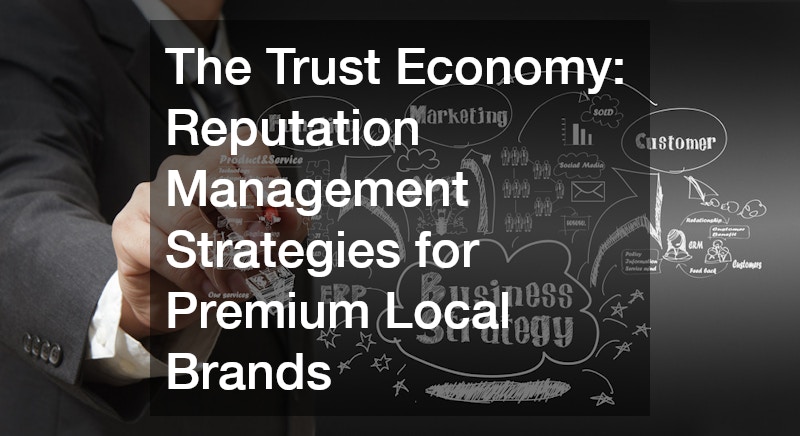
When a client considers spending tens of thousands of dollars on an elective procedure, a major home overhaul, or a high-end lifestyle membership, the purchasing decision is rarely impulse-driven. High-ticket local commerce operates in a high-stakes environment where price sensitivity takes a backseat to risk aversion. Consumers looking for specialized care or luxury upgrades are not merely buying a product; they are purchasing peace of mind. In this environment, a brand’s reputation functions as its primary financial asset. Understanding how to manage, elevate, and protect that reputation is the core framework of modern local marketing.
Winning top-tier local clients requires recognizing that standard marketing tactics—like generic discount ads or high-volume sales pitches—often backfire when applied to luxury or specialized services. High-net-worth individuals and discerning homeowners seek authority, precision, and proof of exceptional delivery. Whether someone is searching for a reliable partner for an in-ground pool install or seeking an elite clinical specialist, their journey begins with an exhaustive evaluation of public sentiment, visual proof, and community standing. Building a strategy around these principles transforms local reputation management into a predictable driver of sustainable revenue.
The Psychology of the High-Ticket Local Consumer
Buyers pursuing premium services operate under a distinct set of psychological triggers. When transaction values are high, the perceived consequence of a bad decision increases exponentially. A consumer seeking a routine maintenance service might tolerate minor miscommunications, but a patient investigating eye lifts demands absolute assurance regarding safety, credentials, and aesthetic outcomes. The primary psychological hurdle is not convincing the prospective client of the value of the service, but rather convincing them that your specific organization is the safest choice available.
This risk-averse mindset extends across all premium lifestyle and home service sectors. A homeowner selecting among regional fence companies or evaluating high-end flooring stores wants to know that the materials used will stand up to time and that the installation crew will respect their property. Similarly, a pet owner searching for a qualified exotic veterinarian requires proof of specialized expertise that standard neighborhood clinics simply cannot offer. In every instance, the prospect relies on online reviews, peer recommendations, and detailed case studies to mitigate personal and financial risk long before making initial contact.
When high-ticket prospects experience this elevated sense of decision risk, their path to purchase hinges on finding verified trust signals. Premium buyers methodically evaluate potential providers through a three-part framework consisting of authentic social proof, undeniable visual evidence of past performance, and respected community endorsements. By deliberately satisfying each element of this trust model, high-margin businesses effectively de-risk the purchasing decision and guide prospective clients smoothly toward high-intent conversions.
Architecting Authentic Social Proof Systems
The backbone of local reputation management is a systematic approach to collecting and displaying customer feedback. Generic, five-star reviews containing vague praise no longer suffice for discerning buyers making high-stakes decisions. When thousands of dollars are on the line, a simple vote of confidence does little to alleviate the deep-seated anxieties associated with choosing a provider. Prospective clients active in high-ticket markets purposefully ignore brief, surface-level testimonials in search of detailed narratives that mirror their exact situation, requirements, and lingering concerns. They want to read about the nuances of the customer experience: how unforeseen roadblocks were handled, how clear the communication remained throughout the engagement, and whether the final result truly justified the financial investment.
To build an impactful review ecosystem that consistently generates these high-converting testimonials, high-ticket service businesses must embed feedback requests directly into their operational workflows rather than treating them as an afterthought. Timing is everything in sentiment capture. The optimal moment to request a review is immediately after the client experiences their first major moment of value realization, when peak emotional satisfaction coincides with project completion. For instance, an auto tinting companies shop should prompt clients for feedback right at the moment of vehicle handoff, when the striking visual transformation is fresh and client satisfaction is at its absolute highest. For longer, more invasive endeavors, such as extensive home exterior revitalization handled by professional house washing teams, the ideal moment occurs during the final walkthrough when the lead technician personally guides the homeowner through the pristine results.
Quality and depth of feedback matter far more than sheer volume when appealing to affluent, risk-averse consumers. Encouraging clients to mention specific operational details about their journey—such as exceptional staff professionalism, meticulous job site cleanliness, transparent invoicing, and proactive status updates—creates a rich, persuasive repository of social proof. Modern buyers inspect these nuanced accounts to gauge an organization’s consistency and attention to detail. Potential buyers reading these detailed, authentic stories can easily project themselves into the experience, visualizing the exact same level of seamless execution and high-end service, which ultimately dismantles their final conversion barriers.
Leveraging Visual Case Studies and Portfolio Proof

For visually driven or lifestyle-oriented offerings, written reviews tell only half the story. High-value clients expect tangible, visual proof of past performance before committing to a contract or membership. Transforming standard project photos into structured, storytelling case studies establishes immediate market authority.
Consider how a luxury outdoor living business or a specialty golf cart seller presents inventory and completed projects. Rather than displaying simple stock images or raw snapshots, a sophisticated brand documents the end-to-end journey. They showcase custom builds, highlight specialized features, and detail how tailored solutions solved specific client challenges. This approach builds confidence by demonstrating consistent craftsmanship and attention to detail.
Visual proof functions across several key formats to reduce perceived buyer risk. Detailed before-and-after transformations showcase precise technical capabilities during aesthetic procedures, exterior restorations, or custom vehicle work. Meanwhile, behind-the-scenes content highlights operational excellence by displaying clean work environments, state-of-the-art equipment, and strict safety protocols. Finally, unscripted video testimonials capture genuine emotion and authentic client stories, helping bridge the gap between initial digital discovery and real-world trust.
By treating every completed project as an asset in a broader portfolio strategy, local service providers create a self-reinforcing flywheel of trust that continuously attracts similar high-value clients.
Establishing Authority Through Specialized Expertise
When buyers seek out specialized or elective services, they are not comparing generalists; they are searching for recognized authorities who possess deep, proven category expertise. When significant capital or personal well-being is involved, consumers actively avoid jack-of-all-trades providers out of fear that a lack of specialization will lead to sub-optimal outcomes. Positioning a brand as the definitive expert in a specific geographic market allows a company to command premium pricing, insulate itself against economic downturns, and entirely bypass traditional price competition. Market leaders do not compete on cost because their perceived expertise creates a distinct, irreplaceable value proposition that discerning clients are more than willing to pay for.
Educational content marketing plays a pivotal role in establishing this market authority long before a prospect ever reaches out to a sales representative. Brands that proactively address common client anxieties, explain complex technical processes, demystify industry jargon, and clarify true cost structures build immediate, durable goodwill with their audience. A prospective member researching an exclusive private golf club, for instance, isn’t just looking at basic facility amenities or fairway layouts—they are trying to understand the underlying community culture, guest access policies, joining fees, and long-term membership value. Providing clear, transparent information directly on digital channels demystifies what can often feel like an intimidating onboarding process, instantly positioning the institution as both highly prestigious and remarkably welcoming and professional.
Similarly, service businesses that take the time to publish comprehensive, unbiased buying guides—explaining material differences, long-term maintenance schedules, industry standards, and realistic project timelines—naturally capture prospective clients during the earliest stages of their research phase. By answering the exact questions high-intent buyers are asking, these companies become trusted advisors rather than simple vendors. When an organization genuinely educates its audience rather than aggressively selling to them, it builds an unshakeable foundation of institutional trust. This consultative approach elevates the brand’s standing within the local community, making competitors who rely on generic, high-pressure advertising tactics seem fundamentally pushy, transactional, and uninspired by comparison.
Strategic Local Partnerships and Cross-Promotions
A brand’s standing within a local market is heavily influenced by the company it keeps, as consumers instinctively judge an organization by the network of peers it aligns with. Formulating strategic, high-level partnerships with non-competing, high-end local businesses allows premium brands to borrow established credibility, elevate their perceived prestige, and gain direct, frictionless access to highly qualified, affluent client bases. When a business integrates into an existing ecosystem of trusted luxury providers, it effectively bypasses the skepticism that typically accompanies cold outreach, inheriting the hard-earned trust that its partner organizations have spent years cultivating within the local community.
Co-marketing initiatives create substantial mutual value while significantly expanding reach among shared, high-net-worth target demographics. A high-end residential contractor, for example, might partner with boutique interior design firms or custom architecture studios to offer comprehensive luxury home packages, while a luxury automotive specialist might sponsor exclusive tasting events hosted at celebrated local restaurants known for regularly attracting the city’s most affluent clientele. These cross-promotional efforts place the brand directly in front of vetted, high-intent prospects in contextually relevant, highly organic, and entirely non-disruptive settings where consumers are already relaxed, engaged, and receptive to premium offers.
Promotional collaborations thrive when built around exclusive community experiences that deliver real, memorable lifestyle value rather than transactional sales pitches. High-end brands often join forces to co-host private wine tastings, high-impact charity galas, or VIP preview nights that naturally gather affluent local residents under one roof in an atmosphere of shared prestige. These strategic partnerships can also extend into shared customer privileges, such as offering preferred scheduling, dedicated concierge access, or custom complimentary perks to the existing, loyal client rosters of allied businesses. Furthermore, co-authoring comprehensive local lifestyle guides, launching joint digital campaigns, or featuring partner brands in high-end print and email publications allows both companies to seamlessly cross-pollinate their audiences, maximizing marketing efficiency while compounding mutual brand equity.
When local consumers repeatedly see a brand aligned with other reputable, top-tier establishments they already know, respect, and patronize, any remaining doubts regarding quality or reliability naturally evaporate. This systematic halo effect solidifies the brand’s reputation as an indispensable, top-tier service provider across the entire regional market, creating an enduring competitive advantage that generic marketing tactics simply cannot replicate.
Active Crisis Mitigation and Feedback Loop Integration
No business, regardless of its prestige, is entirely immune to operational missteps or client dissatisfaction. In high-ticket industries, how a brand handles a mistake often impacts its long-term reputation more than the mistake itself. A proactive approach to crisis management and review mitigation is an absolute necessity.
When negative feedback surfaces publicly, the response strategy must prioritize professional accountability over defensiveness. High-value prospects reading online reviews pay close attention to how management handles criticism. A calm, empathetic, and solution-oriented public response demonstrates that the organization stands behind its work and takes customer satisfaction seriously.
Managing unexpected public criticism requires a clear and deliberate operational path. The moment feedback is posted, management must acknowledge the situation within 24 hours to show immediate empathy and attentiveness. To maintain professional boundaries and privacy, the team should swiftly transition the dispute to private communication channels to negotiate a resolution. Once the client’s concern is satisfactorily addressed, the insights gained should be documented and channeled back into internal training processes to eliminate future service bottlenecks.
Internally, negative feedback must be treated as critical operational intelligence. Repeated complaints regarding communication delays, billing confusion, or scheduling conflicts indicate systemic issues that require immediate attention. By closing the loop between client feedback and operational improvements, luxury service providers prevent recurring errors, elevate consistent service quality, and protect their brand standing over the long term.
The Long-Term ROI of Trust-Based Positioning
Reputation management is not a temporary marketing campaign; it is a permanent operational standard that yields massive compound returns over time. Premium local brands that invest consistently in establishing authority, capturing detailed social proof, and nurturing high-value local partnerships build a formidable competitive moat that cannot be easily replicated by competitors relying strictly on advertising spend.
When trust becomes the core pillar of a brand’s local identity, customer acquisition costs drop while conversion rates and client lifetime values steadily increase. Clients who choose a provider based on reputation and verified expertise are less price-sensitive, more cooperative during project execution, and far more likely to become enthusiastic brand advocates themselves. By consistently delivering exceptional client experiences and systematically showcasing those successes to the surrounding community, high-ticket local brands secure their market dominance and ensure long-term, sustainable growth.