

For modern parents, the days of simply enrolling your child in the nearest school and hoping for the best are largely over. Education has evolved into a complex ecosystem of choices, philosophies, and pathways. Today, managing a child’s education feels less like checking a box and more like cartography. You are mapping a journey that spans nearly two decades, navigating through shifting terrain, and trying to predict the weather patterns of the future economy.
The pressure to “get it right” can be paralyzing. There is a prevailing fear that one wrong turn at age four will derail success at age eighteen. However, the most successful educational maps are not rigid itineraries; they are flexible strategies that account for your family’s values and, most importantly, the unique and evolving personality of your child.
This guide is designed to help you build that map. We will move chronologically and thematically through the critical stages of development, offering deep insights into how to evaluate your options. From the earliest days of separation and socialization to the high-stakes decisions of primary education and beyond, this is your manual for navigating the path ahead.

Evaluating Early Development and Support Options
For many families, this is a logistical puzzle as much as an educational one. You are balancing the need for income and career progression with the biological imperative to nurture a vulnerable infant or toddler. The first step in this phase is to honestly assess your family’s rhythm. Does your child thrive in quiet, one-on-one interactions, or do they light up in a bustling room full of peers?
When you begin the transition from home to external support, you are often choosing between a nanny, a home-based carer, or a structured facility. While a nanny offers personalized attention and lower illness exposure, many parents eventually look toward group settings to foster socialization. This transition to professional childcare is a major milestone. It is often the first time a child learns to rely on adults other than their parents for comfort and safety. The quality of these early interactions can impact attachment styles and emotional resilience, so the environment must be warm, responsive, and consistent.
If you decide that a group setting is the right move, vetting the facility becomes your primary task. You cannot rely on websites alone; you must walk the floors. When you visit a potential child care center, look past the colorful murals and shiny toys. Pay attention to the noise levels and the interactions between staff and children. Are the caregivers down on the floor at eye level with the kids, or are they standing above them, supervising from afar? Ask about staff turnover rates. High turnover in a center is often a red flag for poor management, which trickles down to the quality of care your child receives.
- What is the illness policy? Strict policies protect your child, but they also mean you need a backup plan for when your child inevitably gets a fever.
- How is discipline handled? At this age, redirection should be the primary tool. Avoid centers that use “time-outs” or shaming tactics for toddlers.
- What is the daily rhythm? Toddlers need routine. Look for a visual schedule that balances active play, quiet time, and structured meals.
- How is communication handled? Will you get daily updates, photos, or a log of naps and meals? This data is crucial for managing your child’s evening routine.

Strategies for Selecting the Early Years Foundation
One often overlooked factor is geography. While it might be tempting to drive forty-five minutes for a “prestigious” program, the toll of a long commute on a three-year-old cannot be overstated. Often, high-quality local preschools are the superior choice simply because they allow for more sleep, less stress, and the ability to build a community within your own neighborhood. When your child’s school friends live nearby, scheduling playdates becomes easier, and you naturally build a support network of other parents who live just down the street.
- Look at the walls: Is the artwork uniform (20 identical snowmen), or is it unique to each child? Uniform art suggests a teacher-directed environment; unique art suggests a child-centered approach.
- Listen to the volume: A silent classroom is unnatural for young children, but a chaotic, screaming room is stressful. You want to hear a “productive hum” of chatter and activity.
- Check the conflict resolution: Watch what happens when two kids fight over a toy. Does the teacher solve it immediately (“Give it back, Timmy”), or does she help them negotiate (“Timmy, Sarah was using that. Ask her when she will be done”)?
- Assess the outdoor space: Young children need to move. Is the playground purely plastic structures, or are there natural elements like sand, water, and dirt?
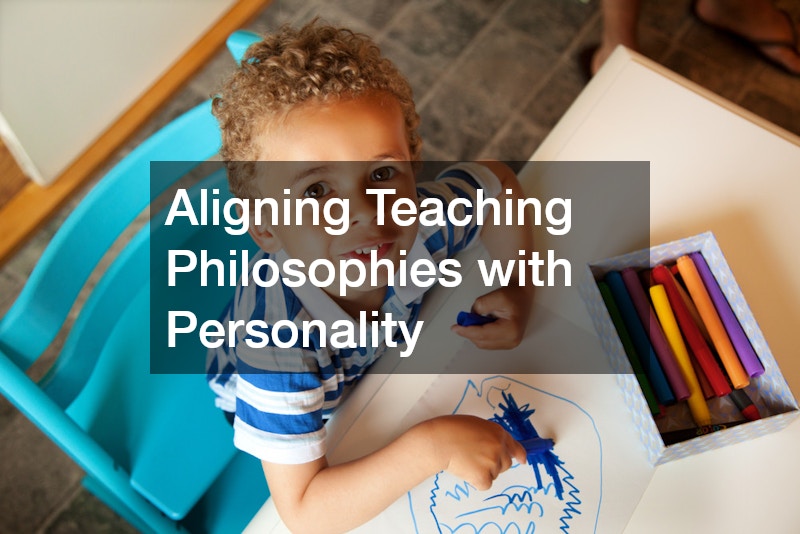
Aligning Teaching Philosophies with Personality
- Reggio Emilia: This approach views the child as a “collaborator” in learning. It is project-based and highly artistic. The environment is considered the “third teacher.” It is excellent for creative, social children who love to work in groups.
- Waldorf (Steiner): This philosophy emphasizes imagination and delays formal academic learning (like reading) until age seven. It focuses on storytelling, art, and nature. It is ideal for families who want to preserve a “slow childhood” and reduce technology exposure.
- Traditional/Academic: These programs look more like a standard elementary classroom, with desks, worksheets, and teacher-led lessons. They are good for children who thrive on clear expectations and routine, but can sometimes be too rigid for active learners.
When matching philosophy to personality, remember that your goal is not to change your child to fit a school, but to find a school that fits your child. A mismatch here can lead to years of resistance and a dislike for learning, while a good match can ignite a lifelong passion for discovery.

Defining Success for the Primary Years
- The Breadth of Curriculum: Does the school value the arts and humanities as much as STEM? A balanced education creates a balanced mind.
- Learning Support: Even bright children can have learning differences like dyslexia or ADHD. Ask specifically how the school supports students who drift outside the “average” curve. Do they have learning specialists on staff?
- Pastoral Care: How does the school handle bullying and social-emotional learning? Look for programs that teach empathy and resilience explicitly.
- Parental Involvement: Some private schools expect a high level of parental volunteering and fundraising. Ensure you have the bandwidth for the community expectations.

Investigating Specialized and Niche Academic Paths
- Single-Sex vs. Co-ed: Some research suggests boys and girls learn differently at this age. Single-sex schools can tailor their teaching styles accordingly, but co-ed schools offer a more realistic social environment.
- Language Immersion: If you want your child to be bilingual, an immersion school is the most effective method. However, ensure that the math and science curriculum doesn’t suffer due to the language focus.
- Religious Affiliation: Many private schools have a religious foundation. You need to decide if you are comfortable with the specific values and religious instruction integrated into the daily routine.
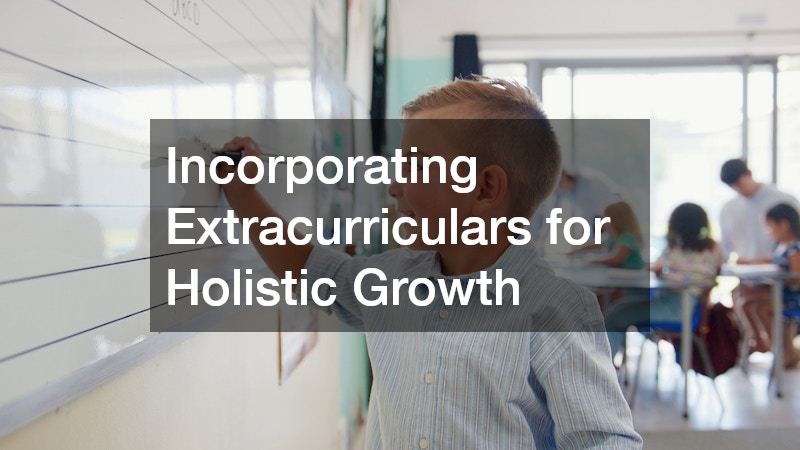
Incorporating Extracurriculars for Holistic Growth
- The Rule of One: During the school term, try to limit organized activities to one sport and one creative pursuit. Over-scheduling leads to burnout and prevents children from learning how to manage their own free time.
- Skill vs. Thrill: Differentiate between camps that teach a hard skill (coding, sailing, pottery) and those that are purely for entertainment. Both have value, but they serve different purposes in your map.
- Social expansion: Camps and clubs are excellent ways for children to meet peers from different socio-economic and geographic backgrounds, bursting the “bubble” of their school environment.
- Rest is an activity: Do not feel the need to fill every week of the summer. Boredom is the birthplace of creativity. Schedule weeks where the only plan is to do nothing.