
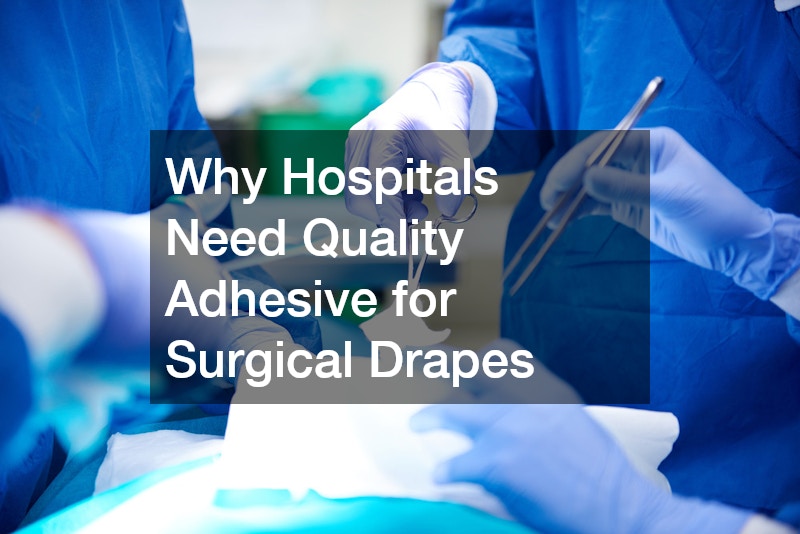
Surgical procedures are critical operations where precision, safety, and hygiene play indispensable roles. Thus, ensuring that every element within the surgical environment adheres to high standards is paramount. One crucial yet often overlooked component is the adhesive used for surgical drapes, a factor that bears significant importance in maintaining sterile field integrity throughout surgical procedures.
What Is the Role of Adhesive in Surgical Drapes?
The Functionality of Adhesives
Surgical drapes are pivotal in maintaining the sterile field during surgical procedures. The quality of adhesive used in these drapes dictates not only the ease of application but also the efficacy in creating a barrier against contaminants.
High-quality adhesives ensure that drapes remain securely in place throughout surgeries. This plays a crucial role in preventing unintended slips that could compromise the procedure.
Moreover, adhesives are formulated to be non-allergenic and skin-friendly, minimizing the risk of adverse reactions. The adhesive technology used in surgical drapes continues to evolve with innovations enhancing both functionality and patient safety.
Importance of Maintaining Sterility
Maintaining sterility is of utmost importance in the operating room to prevent infections. Adhesives are integral to sealing surgical drapes effectively, ensuring that no gaps allow bacteria to enter the sterile field.
The adhesive layer acts as an additional barrier against pathogens. Poor adhesive quality can result in breaks in sterility, presenting significant risks to patient outcomes.
Reliability in adhesion contributes to comprehensive sterile technique, enhancing overall surgical success. Through technological advancements, adhesives have become more robust, meeting the high demands of surgical environments.
How Does Poor Adhesive Quality Impact Surgical Outcomes?
Risks of Adhesive Failure
Adhesive failure can lead to catastrophic breaches in the sterile field, escalating the risk of postoperative infections. This directly impacts patient recovery time and increases the likelihood of surgical complications.
The financial implications of adhesive failures are significant, with increased costs associated with extended hospital stays and additional treatments. Hospitals must therefore invest in high-quality adhesives to mitigate these risks.
Quality adhesive solutions provide steadfastness even under stressful conditions, such as moisture and movement. The assurance of a secure seal is indispensable for successful surgical outcomes.
Case Studies and Real-Life Scenarios
Several case studies underscore the impact of poor adhesion on operational success. In some documented instances, hospitals experienced increased infection rates due to inadequate drape adhesion.
Experts advocate for rigorous testing and selection of adhesives based on real-life conditions experienced in operating rooms. The lessons learned from these scenarios highlight the importance of thorough evaluation processes.
Precision in adhesive selection can vastly mitigate risk, ensuring that hospitals are equipped to protect both patients and staff effectively. Strategic investment in advanced adhesive technology is a proactive measure for enhanced clinical outcomes.
What Are the Key Qualities of Effective Surgical Drapes Adhesive?
Characteristics of High-Quality Adhesives
High-quality surgical drape adhesives exhibit strong bonding characteristics that adapt to skin naturally. These adhesives are also engineered to be breathable, adhering without causing dermal damage.
The performance of adhesives is attested through stringent testing that examines tensile strength and resistance to fluids. This multifaceted approach ensures they can withstand operative environments robustly.
Adhesives possessing antimicrobial properties offer additional protective layers against microbial contamination. Such attributes are fundamental in securing the overall sterility of surgical procedures.
Standards and Certifications
Adhesives used in surgical settings are bound by stringent industry standards and certifications that dictate their safety and effectiveness. Compliance with these regulatory benchmarks assures stakeholders of their quality and reliability.
International organizations establish guidelines that adhesives must meet before being considered for clinical use. These include ISO standards, which measure product safety and clinical efficacy.
Certifications such as those from the FDA further validate product claims, enhancing confidence in their use within health institutions. Hospitals rely on these benchmarks to guide their purchasing and usage decisions.
How Can Hospitals Assess and Choose the Right Adhesive?
Evaluation Criteria and Considerations
The selection of the right adhesive begins with an understanding of clinical needs and operational challenges specific to the institution. Hospitals typically engage in rigorous testing to ensure product suitability before adoption.
Considerations include the adhesive’s compatibility with various skin types and its resilience under surgical conditions. These assessments help tailor adhesive procurement to specific procedural requirements.
Evidence-based selection methodologies, bolstered by clinical trials and peer-reviewed evaluations, ensure comprehensive product assessments. Such calculated approaches support procedural integrity and patient safety.
Supplier Selection and Procurement
The procurement process involves collaboration with reputable suppliers who consistently deliver high standards in product quality. Establishing strategic partnerships with suppliers ensures the availability and consistency of high-quality adhesive products.
Criteria for selecting suppliers include their track record, adherence to industry standards, and capability to innovate continually. Hospitals often solicit feedback and conduct site visits to ascertain supplier capabilities.
Leveraging bulk purchasing agreements can offer cost efficiencies, ensuring that quality adhesives remain an economically viable option for surgical departments. Decision-making within procurement is therefore both strategic and financially sound.
What Are the Cost Implications of Using High-Quality Adhesive?
Cost-Benefit Analysis
A cost-benefit analysis of high-quality adhesives reveals significant returns on investment through improved surgical outcomes and reduced infection rates. Initial costs are justified by the long-term savings associated with fewer complications and hospital readmissions.
Hospitals also benefit from the indirect savings of maintaining high operational standards and patient satisfaction. Investing in quality means prioritizing effective care delivery.
Long-Term Financial Impacts
Over time, the use of high-quality adhesives contributes to a positive financial trajectory for health institutions by decreasing liability risks and improving patient throughput. This stability in patient outcomes reinforces systemic efficiencies.
As hospitals navigate fiscal constraints, the emphasis on preventive measures, such as selecting superior adhesives, becomes increasingly pertinent. Long-term financial planning incorporates the judicious use of adhesive technology as a core component of clinical governance.